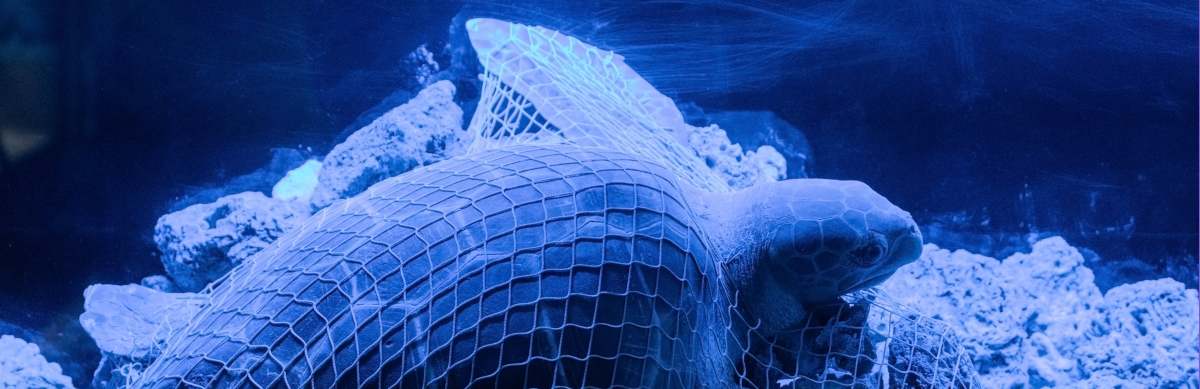
Marine plastic entanglement threatens marine ecosystem quality by causing injuries and deaths among species that become trapped in drifting fishing gear and other large plastic items. This chapter describes how macroplastics released from fishing activities and land-based sources move across the ocean’s surface and create a risk of entanglement for marine mammals, seabirds, and sea turtles. A spatial distribution model simulates how these plastics travel with currents and winds, showing where debris is likely to accumulate over time. A global dataset of recorded entanglement rates helps to determine how sensitive different species are to floating plastic concentrations. From this information, the model calculates how much biodiversity loss can be linked to each unit of plastic entering the ocean. These results are then adjusted using global extinction probabilities to translate regional impacts into global ones.